প্রকাশের তারিখ : ২৮ আগস্ট ২০২৬
Agri loan success: 110 percent of target achieved
||
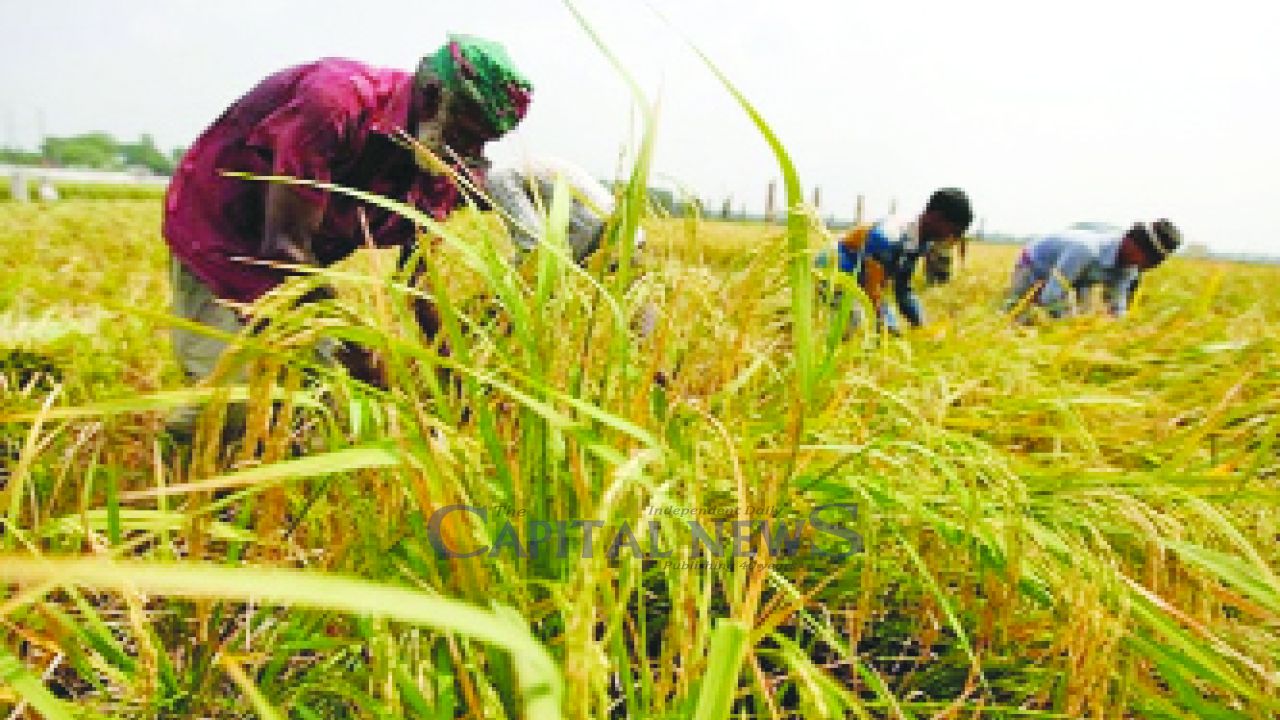
Special Correspondent: The banking sector has set a new record in loan disbursement to the country's agricultural sector. In the fiscal year 2025-26, 58 banks disbursed agricultural and rural loans worth Tk 42,834 crore, which is about 110 percent of the set target. Agricultural loan disbursement increased by about 15 percent in a year. At the same time, there has been great progress in agricultural loan recovery. Recovery increased by about 20 percent in a year. The highest loan was disbursed to the crop sub-sector. Overall, private sector banks were at the top of loan disbursement. However, Islamic banks could not achieve the target. This information has emerged in a report by the Agricultural Loan Department of Bangladesh Bank. The agricultural sector plays a vital role in the country's economy, food security and employment. Currently, agriculture contributes 11.71 percent to the country's gross domestic product (GDP) and employs about 46 percent of the population. Agricultural production has increased more than threefold since independence. Bangladesh is one of the leading countries in the world in the production of rice, freshwater fish, jute and potatoes. However, climate change, decreasing arable land and lack of adequate financing are the main challenges facing the agricultural sector. The report says that it is possible to ensure agricultural productivity and sustainable development through the use of modern technology, expansion of high-yielding and climate-tolerant varieties, crop diversification, and climate-smart agricultural systems.To strengthen financing in the agricultural and rural sectors, Bangladesh Bank formulates agricultural and rural credit policies and programs every year. As part of this, a target of disbursing Tk 39,000 crore in loans to the agricultural and rural sectors through 58 participating banks in the fiscal year 2025-26 was set. However, by the end of the year, the target was exceeded by 109.83 percent. According to the report, specialized banks have done the best in disbursing loans to the agricultural sector. Against the target of Tk 10,223 crore, they have disbursed Tk 12,615 crore 57 lakh, which is 123.40 percent of the target. State-owned commercial banks have achieved 109.89 percent against the target of Tk 3,657 crore. Foreign commercial banks have achieved 104.5 percent against the target of Tk 1,593 crore and private commercial banks have achieved 108.5 percent against the target of Tk 17,106 crore. However, Islamic banks achieved 94.37 percent by distributing 6,593.2 million taka against the target of 6,421 crore taka. As a result, this category of banks was the only one that could not meet the set target.Highest disbursement in December, big drop in January: Monthly data shows that agricultural loans were disbursed at Tk 2,154 crore in July. Then, loan disbursement increased continuously in August, September and November. In December, the highest amount of agricultural loans of the year was Tk 4,915 crore 49 lakh. However, a big shock came after December. In January, disbursements decreased by 31.82 percent compared to the previous month. Disbursements also decreased slightly in February and March. Then, the banks turned around again in April. Disbursements increased by 21.91 percent in that month compared to March. Despite a slight decrease in May, the fiscal year ended with a growth of 29.47 percent in June. In June alone, Tk 4,757 crore 55 lakh was disbursed.Private banks have given the most loans: The largest share of total agricultural credit distribution came from private commercial banks. This category of banks has made 43.15 percent or Tk 18,482 crore of the total distribution. Specialized banks are in second place with 29.45 percent or Tk 12,615 crore. In addition, Islamic banks have distributed 14.15 percent or Tk 6,590 crore, state-owned commercial banks have distributed 4,180 crore or Tk 9.38 percent, and foreign commercial banks have distributed 1,657 crore or Tk 3.87 percent.The highest loan amount went to the crop sector: According to the Bangladesh Bank policy, there are instructions to distribute loans in a fixed ratio to crops, fisheries, livestock, irrigation, agricultural machinery and rural income-generating activities. But in reality, only 47.32 percent of the total agricultural loans went to the crop sector. 26.38 percent was distributed to the livestock and poultry sector, 13.33 percent to the fisheries sector and 11.68 percent to the non-agricultural rural credit sector. On the other hand, only 0.50 percent was distributed to the irrigation sector, 0.43 percent to the agricultural machinery sector and only 0.37 percent to the grain storage and marketing sector.Disbursements increased by almost 15 percent in a year: Agricultural credit disbursements increased by 14.76 percent in the fiscal year 2025-26 compared to the fiscal year 2024-25. On a bank-by-bank basis, disbursements by specialized banks increased by 14.7 percent, by state-owned commercial banks by 22.74 percent, by foreign commercial banks by 18.3 percent, and by private commercial banks by 19.73 percent. However, disbursements by Islamic banks decreased by 1.50 percent. Meanwhile, the balance of agricultural loans at the end of the last fiscal year was 5.55 percent higher than the previous year. Of this, the balance of specialized banks increased by 2.3 percent, by state-owned commercial banks by 5.74 percent, by private commercial banks by 9.50 percent, and by Islamic banks by 12.19 percent. However, the balance of foreign commercial banks decreased by 6.64 percent.Positive picture in recovery: Along with the distribution of agricultural loans, there has been good progress in loan recovery. In the fiscal year 2025-26, the total agricultural loan recovery of banks was 45,626 crore 93 lakh taka, which is 19.99 percent more than the previous fiscal year. Compared to the previous fiscal year, the recovery of specialized banks increased by 17.35 percent, state-owned commercial banks by 43.77 percent, foreign commercial banks by 120.31 percent and private commercial banks by 25.4 percent. However, the recovery of Islamic banks decreased by 12.9 percent. That is, except Islamic banks, all types of banks have done better in agricultural loan recovery compared to the previous year.
© 2025 The Daily Capital News