প্রকাশের তারিখ : ০৫ নভেম্বর ২০২৬
Chinese Embassy in Dhaka at the centre of efforts to deepen Bangladesh-China relations
||
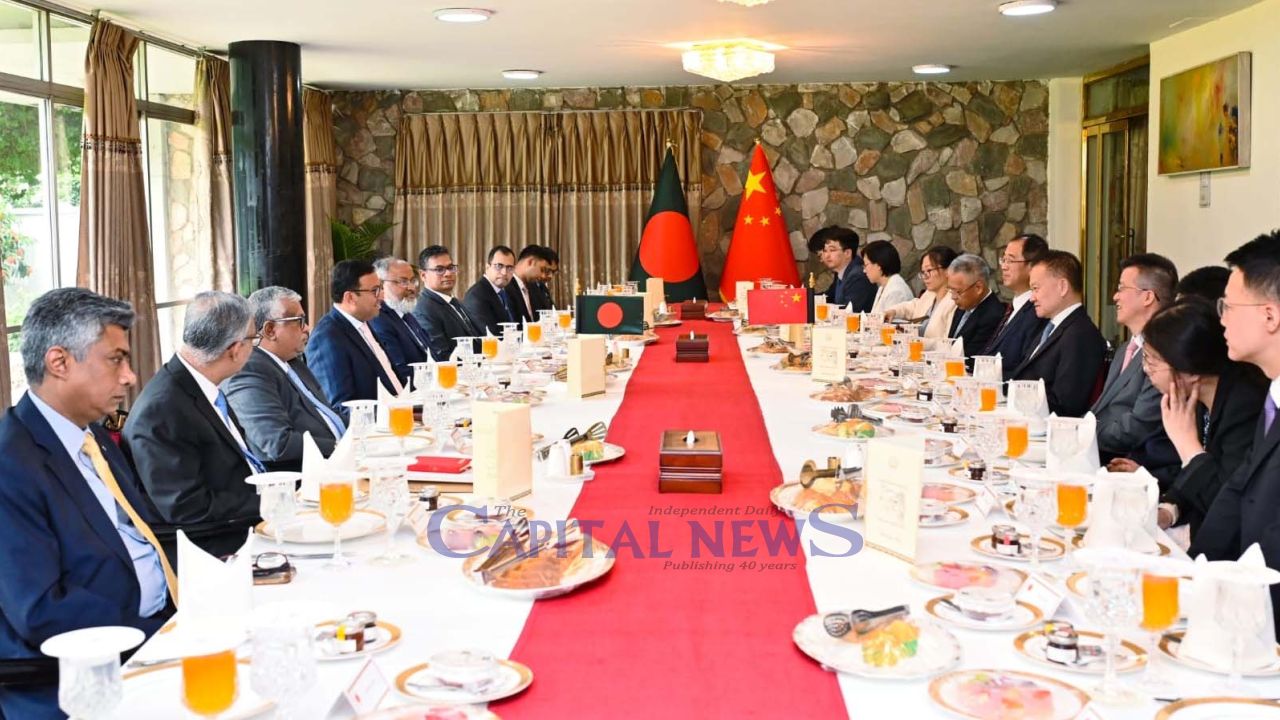
Beijing seeks stronger political, economic and diplomatic engagement as Dhaka looks to expand trade, investment and connectivity with ChinaMM Rahmatullah: The Chinese Embassy in Dhaka is expected to remain an important diplomatic channel in efforts to strengthen Bangladesh-China relations, as the two countries renew their commitment to expanding political engagement, trade, investment and development cooperation.The renewed emphasis on bilateral ties came during a high-level meeting between Bangladesh's State Minister for Foreign Affairs Humaiun Kobir and Liu Haixing, Minister of the International Department of the Central Committee of the Communist Party of China (IDCPC), at State Guest House Padma in Dhaka.Liu visited Bangladesh from November 3 to 5, 2026, according to a statement issued by the Ministry of Foreign Affairs.Although the meeting was hosted by the Bangladesh Foreign Ministry, its significance extends to the broader diplomatic engagement between Beijing and Dhaka, in which the Chinese Embassy in Bangladesh plays an important role in maintaining communication, facilitating cooperation and advancing mutual interests.Both sides recalled the longstanding friendship between Bangladesh and China and expressed satisfaction with the outcomes of the Bangladesh Prime Minister's visit to China in June 2026. They also reaffirmed their commitment to taking bilateral relations to a new height under the framework of a "China-Bangladesh Community with a Shared Future in the New Era".For the Chinese diplomatic mission in Dhaka, the renewed commitment offers an opportunity to further strengthen cooperation in areas that directly affect Bangladesh's economic development and international engagement.Trade, investment, connectivity and development cooperation featured prominently in the discussions, reflecting the growing importance of economic diplomacy in Bangladesh-China relations.Bangladesh is seeking greater foreign investment, industrial diversification, infrastructure development and access to international markets. China, as a major global economic power, remains an important partner in these areas.The Chinese Embassy in Dhaka has a significant diplomatic role in promoting business contacts, encouraging investment and facilitating exchanges between government institutions, private-sector organisations and development partners.Stronger economic engagement could open opportunities in manufacturing, infrastructure, energy, technology and other productive sectors. Increased cooperation could also support employment generation, industrial capacity and Bangladesh's long-term development objectives.Political and party-to-party exchanges were also discussed, highlighting the importance of maintaining regular communication beyond formal government-level engagements.An interesting aspect of Liu Haixing's visit was his reference to his father, former Chinese Ambassador to Bangladesh Liu Shuqing.Liu Haixing recalled his father's contributions during his diplomatic assignment in Bangladesh and his role in strengthening friendship between the two countries.The reference highlighted the longstanding diplomatic and people-to-people connections linking Beijing and Dhaka.Liu Haixing, while highlighting the important role of the IDCPC in China's foreign policy, assured that his department would continue working to strengthen bilateral relations.His remarks reinforced the importance Beijing attaches to political engagement and institutional cooperation with Bangladesh.The Rohingya issue was another important subject raised during the meeting.State Minister Humaiun Kobir sought China's continued support for the early repatriation of Rohingya refugees to Myanmar.For Bangladesh, the prolonged refugee crisis remains a major humanitarian, economic and security concern. A safe, voluntary, dignified and sustainable return to Myanmar is considered essential for resolving the situation.China's diplomatic engagement with Myanmar gives Beijing an important position in supporting efforts towards a lasting solution. Continued diplomatic communication involving China, Bangladesh and Myanmar could therefore be significant in creating favourable conditions for repatriation.The Bangladeshi request also reflects Dhaka's expectation that Beijing will continue using its diplomatic influence constructively to help resolve the crisis.The latest engagement demonstrates that Bangladesh-China relations are no longer confined to traditional diplomatic friendship. Economic cooperation, regional connectivity, political dialogue and humanitarian concerns are increasingly interconnected.For the Chinese Embassy in Dhaka, strengthening this partnership involves not only maintaining government-to-government relations but also encouraging closer engagement among businesses, institutions and people of the two countries.As Bangladesh seeks to broaden its international economic partnerships, China remains an important stakeholder in its development and regional diplomacy.The renewed commitment to building a community with a shared future provides a framework for expanding cooperation. Its practical success, however, will depend on translating diplomatic understanding into stronger investment, mutually beneficial trade, effective development cooperation and progress on longstanding regional challenges, particularly the Rohingya crisis.The latest visit by Liu Haixing has thus provided fresh momentum to Bangladesh-China engagement, with the Chinese Embassy in Dhaka remaining an important part of the diplomatic bridge connecting the two neighbouring Asian partners.
© 2025 The Daily Capital News