
The Daily Capital News

Saudi visit signals new economic horizon for Bangladesh

Saudi visit signals new economic horizon for Bangladesh

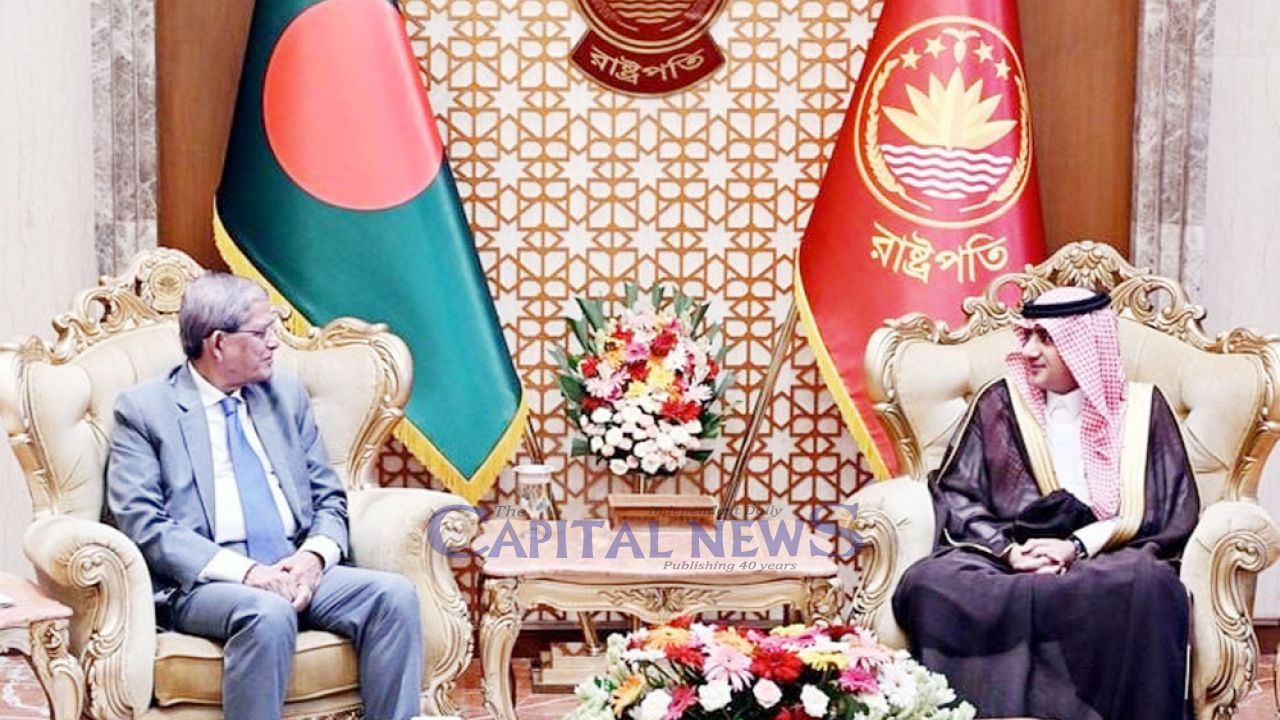
MM Rahmatullah: The upcoming official visit of Bangladesh's Prime Minister Tarique Rahman to the Kingdom of Saudi Arabia (KSA), at the invitation of the Custodian of the Two Holy Mosques, is widely expected to become one of the most significant diplomatic engagements between the two countries in recent years. More than a ceremonial visit, it represents a strategic opportunity to deepen bilateral cooperation in labor migration, investment, energy, infrastructure, technology, and regional economic integration.

For decades, Saudi Arabia has remained one of Bangladesh's closest friends in the Middle East. The relationship extends far beyond diplomacy. It is built upon shared religious values, strong people-to-people connections, expanding economic cooperation, and a long-standing labor partnership that has transformed millions of Bangladeshi families through overseas employment and remittance income.

Today, as Saudi Arabia pursues its ambitious Vision 2030 agenda and Bangladesh seeks to accelerate economic transformation, both nations appear ready to move beyond their traditional employer-worker relationship toward a broader strategic economic partnership.

Saudi Arabia is Bangladesh's largest overseas labor market. Nearly three million Bangladeshi workers are currently employed across the Kingdom in construction, healthcare, hospitality, transportation, manufacturing, domestic services, and various skilled professions. Their contribution is significant not only to Saudi Arabia's economic development but also to Bangladesh's economy through steady remittance inflows.

According to Bangladesh Bank, remittances from Saudi Arabia exceeded US$2.7 billion during the last fiscal year, making the Kingdom one of the largest sources of foreign exchange for Bangladesh. These earnings support millions of households, strengthen Bangladesh's foreign exchange reserves, and contribute directly to national economic stability.

Data from the Bureau of Manpower, Employment and Training (BMET) further demonstrate Saudi Arabia's importance. Between January 1 and June 30 this year, approximately 214,570 Bangladeshi workers secured employment in Saudi Arabia, substantially higher than the number migrating to several other popular labor destinations.

Diplomatic observers believe the Prime Minister's visit comes at a particularly important moment. Bangladesh is rapidly developing its industrial base, while Saudi Arabia is actively diversifying its economy away from dependence on oil revenues.

In recent interviews with this correspondent, Saudi Ambassador to Bangladesh Dr. Abdullah Jafar H. Bin Abiyah described the next five years as a "transformational chapter" in Bangladesh-Saudi relations.

According to the ambassador, both countries are seeking to expand cooperation beyond labor migration into strategic investment, industrial collaboration, technology transfer, renewable energy, healthcare, logistics, food security, digital innovation, and infrastructure development.

He emphasized that Bangladesh has emerged as one of South Asia's most attractive investment destinations due to its strategic geographic location, large domestic market of over 170 million people, competitive workforce, and sustained economic growth.

Saudi investors are reportedly showing growing interest in several sectors, including:

Energy and power generation

Oil refining and petrochemical industries

LNG terminals

Renewable energy projects

Information technology and digital finance

Economic zones

Modern port infrastructure

Tourism and hospitality

Agriculture and food processing

Healthcare

Pharmaceutical manufacturing

Aerospace maintenance facilities

Such investments would complement Bangladesh's long-term development strategy while creating employment opportunities for local professionals.

Despite the overall strength of bilateral relations, significant challenges remain in the labor sector.

Industry representatives, recruiting agencies, and migrant worker organizations have expressed concerns regarding delays in work permit processing, employer-related irregularities, delayed issuance and renewal of Iqama (residence permits), delayed wage payments, and insufficient protection for migrant workers.

Many Bangladeshi workers reportedly face uncertainty after arriving in Saudi Arabia because some employers fail to complete residency documentation on time or do not fully honor employment contracts.

Recruitment agencies also report that many approved visas and labor demands have recently been cancelled due to documentation discrepancies and employer-related administrative issues, causing financial losses for both workers and licensed recruiting agencies.

Several stakeholders believe that these issues require stronger bilateral coordination rather than unilateral administrative measures.

Documentation Requirements and Recruitment Challenges

Recent changes in Bangladesh's overseas employment procedures have also generated concern among recruitment agencies.

According to industry sources, Saudi-bound workers historically migrated under recruitment procedures that did not always require extensive employer demand documentation during exit clearance. However, since early July, new documentation requirements have reportedly slowed the issuance of emigration clearance for many Saudi-bound workers.

Recruitment agencies argue that these procedural changes have delayed departures, increased uncertainty for workers, and, in some cases, caused medical certificates and visas to expire before travel.

Migration experts suggest that while transparency and accountability are essential, administrative reforms should be implemented in close consultation with stakeholders to avoid unnecessary disruptions in overseas employment.

Protecting Workers Must Be a Shared Priority: Experts agree that the future success of Bangladesh-Saudi labor cooperation depends not only on increasing recruitment numbers but also on improving worker welfare.

Several practical measures have been suggested for discussion during the Prime Minister's visit, including:

Faster issuance and renewal of Iqama.

Timely payment of salaries.

Better enforcement of employment contracts.

Stronger monitoring of recruiting companies.

Joint mechanisms for resolving labor disputes.

Improved pre-departure orientation.

Expanded skills certification.

Lower migration costs.

Greater legal protection for migrant workers.

The Saudi ambassador has indicated that both governments are already working together to reduce migration costs, improve skills certification, and better prepare workers before their arrival in the Kingdom.

These reforms could significantly improve the quality of labor migration while enhancing Bangladesh's international reputation as a supplier of skilled human resources.

Vision 2030 Creates New Possibilities: Saudi Arabia's Vision 2030 economic transformation program is creating entirely new employment opportunities that extend well beyond traditional construction and manual labor.

Govt unveils comprehensive action plan for power sector Kingdom is investing heavily in digital technology, tourism, logistics, healthcare, renewable energy, entertainment, smart cities, and advanced manufacturing.

For Bangladesh, this transformation presents an opportunity to upgrade its overseas workforce by supplying more technicians, engineers, healthcare professionals, IT specialists, hospitality workers, and renewable energy experts.

Such diversification would not only increase workers' incomes but also reduce dependence on lower-skilled occupations.

Expanding Investment Cooperation: Bangladesh's Ministry of Foreign Affairs believes that economic cooperation between the two countries can be substantially strengthened through strategic investment partnerships.

Potential areas include:

Large-scale solar energy projects

Petroleum refining

Industrial parks

Special Economic Zones (SEZs)

Maritime infrastructure

Port development

Expressway construction

Digital economy initiatives

Artificial intelligence and fintech

Halal food production

Fertilizer manufacturing

Agro-processing industries

International tourism projects

Saudi investment in these sectors could help Bangladesh accelerate industrialization while offering Saudi investors access to one of Asia's fastest-growing consumer markets.

Strengthening Bilateral Diplomacy: Diplomatic analysts believe that successful implementation of new agreements will require regular high-level dialogue between both governments.

A comprehensive labor cooperation framework, supported by digital verification systems, stronger employer accountability, and closer institutional cooperation, could address many of the existing challenges faced by Bangladeshi workers.

Equally important will be enhancing cooperation in education, vocational training, technology exchange, and industrial development.

Such initiatives would allow bilateral relations to evolve from a labor-centric partnership into a multidimensional strategic alliance.

Looking Ahead: The Prime Minister's forthcoming visit to Saudi Arabia arrives at a pivotal moment for both nations.

For Bangladesh, the visit offers an opportunity to secure stronger labor protections, attract new investment, expand employment opportunities, and reinforce one of its most important economic partnerships.

For Saudi Arabia, closer engagement with Bangladesh aligns with Vision 2030's objectives of economic diversification, industrial expansion, and human capital development.

If both governments can translate political goodwill into concrete agreements on labor mobility, investment, technology transfer, renewable energy, infrastructure, and skills development, the visit may mark the beginning of a new era in Bangladesh-Saudi relations.

Ultimately, the success of the visit will not be measured solely by diplomatic protocol or signed memoranda. It will depend on whether the outcomes improve the lives of millions of Bangladeshi workers, strengthen economic resilience, encourage responsible investment, and build a modern partnership capable of meeting the evolving aspirations of both countries in an increasingly interconnected world.

Subject : Diplomacy Development

Write Your Opinion

The Daily Capital News

শনিবার, ০৫ সেপ্টেম্বর ২০২৬


Saudi visit signals new economic horizon for Bangladesh

Publish Date : 08 July 2026

featured Image
MM Rahmatullah: The upcoming official visit of Bangladesh's Prime Minister Tarique Rahman to the Kingdom of Saudi Arabia (KSA), at the invitation of the Custodian of the Two Holy Mosques, is widely expected to become one of the most significant diplomatic engagements between the two countries in recent years. More than a ceremonial visit, it represents a strategic opportunity to deepen bilateral cooperation in labor migration, investment, energy, infrastructure, technology, and regional economic integration.For decades, Saudi Arabia has remained one of Bangladesh's closest friends in the Middle East. The relationship extends far beyond diplomacy. It is built upon shared religious values, strong people-to-people connections, expanding economic cooperation, and a long-standing labor partnership that has transformed millions of Bangladeshi families through overseas employment and remittance income.Today, as Saudi Arabia pursues its ambitious Vision 2030 agenda and Bangladesh seeks to accelerate economic transformation, both nations appear ready to move beyond their traditional employer-worker relationship toward a broader strategic economic partnership.Saudi Arabia is Bangladesh's largest overseas labor market. Nearly three million Bangladeshi workers are currently employed across the Kingdom in construction, healthcare, hospitality, transportation, manufacturing, domestic services, and various skilled professions. Their contribution is significant not only to Saudi Arabia's economic development but also to Bangladesh's economy through steady remittance inflows.According to Bangladesh Bank, remittances from Saudi Arabia exceeded US$2.7 billion during the last fiscal year, making the Kingdom one of the largest sources of foreign exchange for Bangladesh. These earnings support millions of households, strengthen Bangladesh's foreign exchange reserves, and contribute directly to national economic stability.Data from the Bureau of Manpower, Employment and Training (BMET) further demonstrate Saudi Arabia's importance. Between January 1 and June 30 this year, approximately 214,570 Bangladeshi workers secured employment in Saudi Arabia, substantially higher than the number migrating to several other popular labor destinations.Diplomatic observers believe the Prime Minister's visit comes at a particularly important moment. Bangladesh is rapidly developing its industrial base, while Saudi Arabia is actively diversifying its economy away from dependence on oil revenues.In recent interviews with this correspondent, Saudi Ambassador to Bangladesh Dr. Abdullah Jafar H. Bin Abiyah described the next five years as a "transformational chapter" in Bangladesh-Saudi relations.According to the ambassador, both countries are seeking to expand cooperation beyond labor migration into strategic investment, industrial collaboration, technology transfer, renewable energy, healthcare, logistics, food security, digital innovation, and infrastructure development.He emphasized that Bangladesh has emerged as one of South Asia's most attractive investment destinations due to its strategic geographic location, large domestic market of over 170 million people, competitive workforce, and sustained economic growth.Saudi investors are reportedly showing growing interest in several sectors, including:Energy and power generationOil refining and petrochemical industriesLNG terminalsRenewable energy projectsInformation technology and digital financeEconomic zonesModern port infrastructureTourism and hospitalityAgriculture and food processingHealthcarePharmaceutical manufacturingAerospace maintenance facilitiesSuch investments would complement Bangladesh's long-term development strategy while creating employment opportunities for local professionals.Despite the overall strength of bilateral relations, significant challenges remain in the labor sector.Industry representatives, recruiting agencies, and migrant worker organizations have expressed concerns regarding delays in work permit processing, employer-related irregularities, delayed issuance and renewal of Iqama (residence permits), delayed wage payments, and insufficient protection for migrant workers.Many Bangladeshi workers reportedly face uncertainty after arriving in Saudi Arabia because some employers fail to complete residency documentation on time or do not fully honor employment contracts.Recruitment agencies also report that many approved visas and labor demands have recently been cancelled due to documentation discrepancies and employer-related administrative issues, causing financial losses for both workers and licensed recruiting agencies.Several stakeholders believe that these issues require stronger bilateral coordination rather than unilateral administrative measures.Documentation Requirements and Recruitment ChallengesRecent changes in Bangladesh's overseas employment procedures have also generated concern among recruitment agencies.According to industry sources, Saudi-bound workers historically migrated under recruitment procedures that did not always require extensive employer demand documentation during exit clearance. However, since early July, new documentation requirements have reportedly slowed the issuance of emigration clearance for many Saudi-bound workers.Recruitment agencies argue that these procedural changes have delayed departures, increased uncertainty for workers, and, in some cases, caused medical certificates and visas to expire before travel.Migration experts suggest that while transparency and accountability are essential, administrative reforms should be implemented in close consultation with stakeholders to avoid unnecessary disruptions in overseas employment.Protecting Workers Must Be a Shared Priority: Experts agree that the future success of Bangladesh-Saudi labor cooperation depends not only on increasing recruitment numbers but also on improving worker welfare.Several practical measures have been suggested for discussion during the Prime Minister's visit, including:Faster issuance and renewal of Iqama.Timely payment of salaries.Better enforcement of employment contracts.Stronger monitoring of recruiting companies.Joint mechanisms for resolving labor disputes.Improved pre-departure orientation.Expanded skills certification.Lower migration costs.Greater legal protection for migrant workers.The Saudi ambassador has indicated that both governments are already working together to reduce migration costs, improve skills certification, and better prepare workers before their arrival in the Kingdom.These reforms could significantly improve the quality of labor migration while enhancing Bangladesh's international reputation as a supplier of skilled human resources.Vision 2030 Creates New Possibilities: Saudi Arabia's Vision 2030 economic transformation program is creating entirely new employment opportunities that extend well beyond traditional construction and manual labor.Govt unveils comprehensive action plan for power sector Kingdom is investing heavily in digital technology, tourism, logistics, healthcare, renewable energy, entertainment, smart cities, and advanced manufacturing.For Bangladesh, this transformation presents an opportunity to upgrade its overseas workforce by supplying more technicians, engineers, healthcare professionals, IT specialists, hospitality workers, and renewable energy experts.Such diversification would not only increase workers' incomes but also reduce dependence on lower-skilled occupations.Expanding Investment Cooperation: Bangladesh's Ministry of Foreign Affairs believes that economic cooperation between the two countries can be substantially strengthened through strategic investment partnerships.Potential areas include:Large-scale solar energy projectsPetroleum refiningIndustrial parksSpecial Economic Zones (SEZs)Maritime infrastructurePort developmentExpressway constructionDigital economy initiativesArtificial intelligence and fintechHalal food productionFertilizer manufacturingAgro-processing industriesInternational tourism projectsSaudi investment in these sectors could help Bangladesh accelerate industrialization while offering Saudi investors access to one of Asia's fastest-growing consumer markets.Strengthening Bilateral Diplomacy: Diplomatic analysts believe that successful implementation of new agreements will require regular high-level dialogue between both governments.A comprehensive labor cooperation framework, supported by digital verification systems, stronger employer accountability, and closer institutional cooperation, could address many of the existing challenges faced by Bangladeshi workers.Equally important will be enhancing cooperation in education, vocational training, technology exchange, and industrial development.Such initiatives would allow bilateral relations to evolve from a labor-centric partnership into a multidimensional strategic alliance.Looking Ahead: The Prime Minister's forthcoming visit to Saudi Arabia arrives at a pivotal moment for both nations.For Bangladesh, the visit offers an opportunity to secure stronger labor protections, attract new investment, expand employment opportunities, and reinforce one of its most important economic partnerships.For Saudi Arabia, closer engagement with Bangladesh aligns with Vision 2030's objectives of economic diversification, industrial expansion, and human capital development.If both governments can translate political goodwill into concrete agreements on labor mobility, investment, technology transfer, renewable energy, infrastructure, and skills development, the visit may mark the beginning of a new era in Bangladesh-Saudi relations.Ultimately, the success of the visit will not be measured solely by diplomatic protocol or signed memoranda. It will depend on whether the outcomes improve the lives of millions of Bangladeshi workers, strengthen economic resilience, encourage responsible investment, and build a modern partnership capable of meeting the evolving aspirations of both countries in an increasingly interconnected world.

The Daily Capital News

Advisory Editor: Gayeshwar Chandra Roy
Editor: Abul Kashem Majumder
Acting Editor: Mohammad Alamgir Hossain
Executive Editor: Farid Ahmed Ripon

© 2025 The Daily Capital News