

Zakir Farazi
Journalism is no
longer confined to merely collecting and publishing news. A skilled journalist
must excel across multiple dimensions, including fact-checking, determining
news value, conducting interviews, honing investigative skills, gathering
information on-site, capturing photos and videos, utilizing mobile technology,
editing news, and responsibly presenting reports across digital platforms.
The journalism training
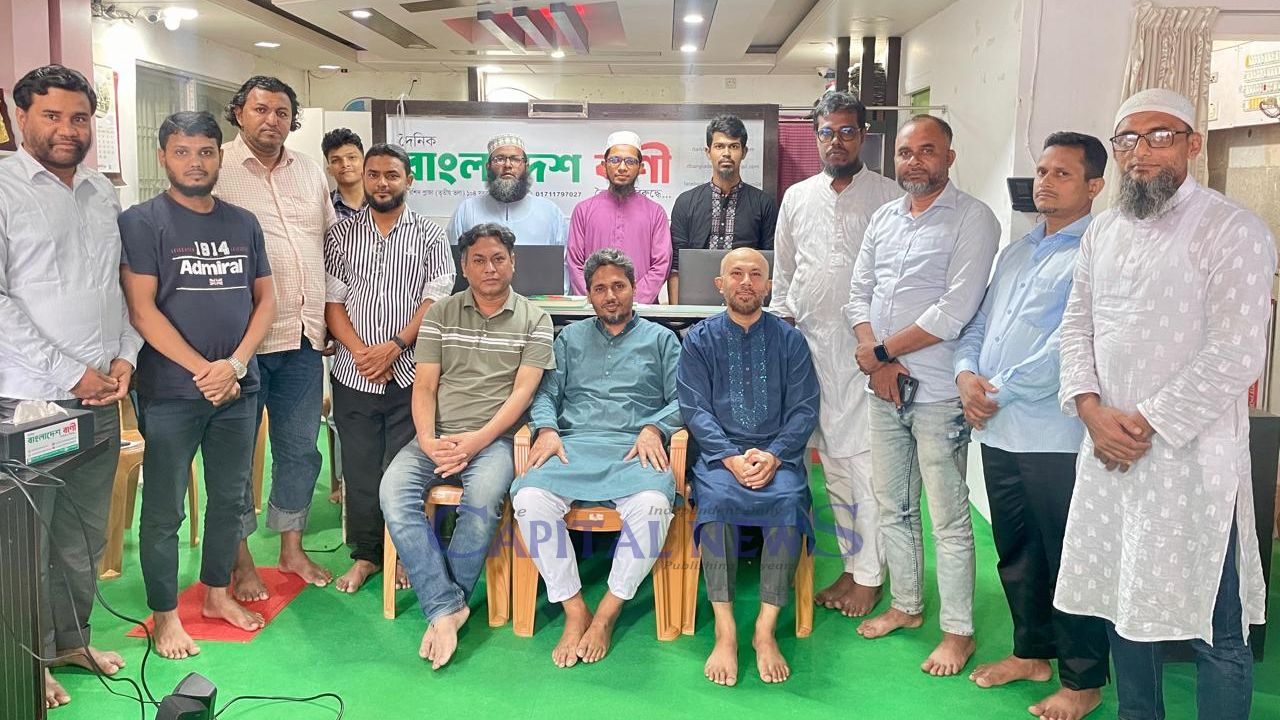
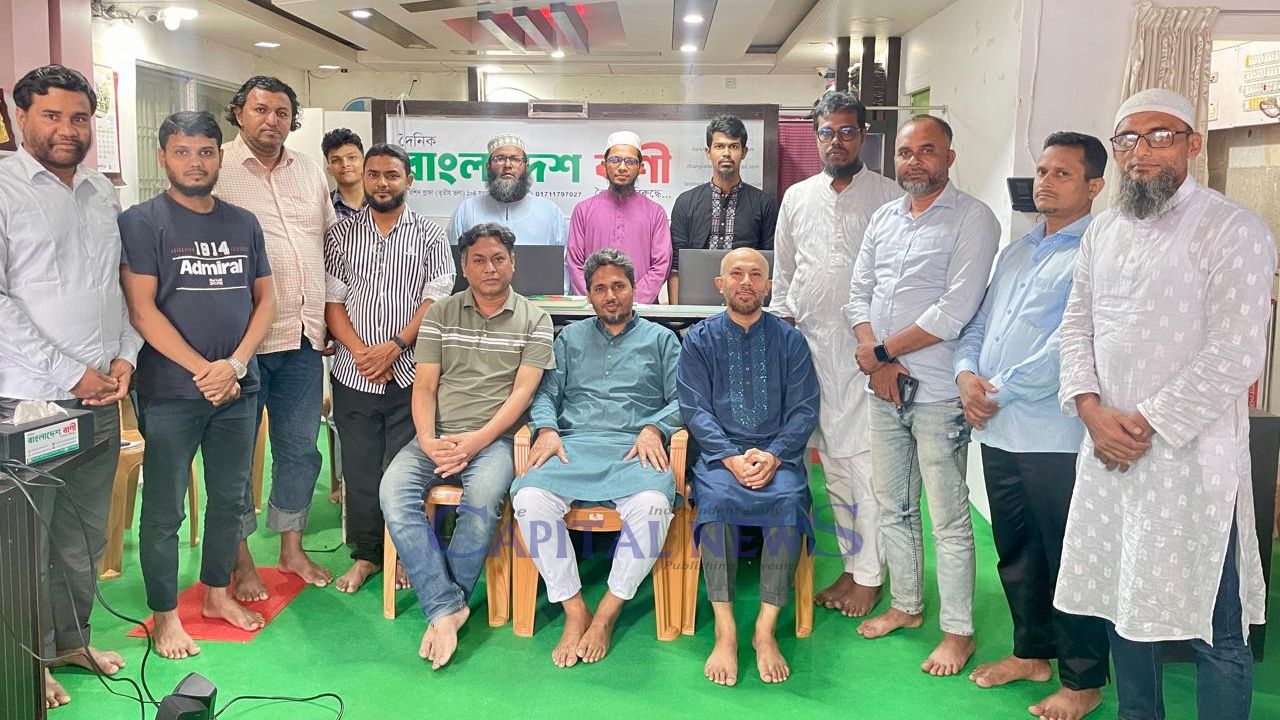
course run by the Barishal Media Corporation (BMC) has created an opportunity
to acquire these skills in today’s technology-driven media landscape. Out of
the 24 classes in this three-month training course, 12 are dedicated to
practical sessions. Held every Friday from 9:00 AM to 5:00 PM at the office of
Dainik Bangladesh Bani in Barishal, the course combines theoretical discussions
with hands-on, practical training led by experienced journalists and media
experts.
One of the main
objectives of this training is to build professional and responsible media
personnel. Beginners are taught fundamental techniques in news gathering,
verification, news writing, and multimedia content creation prior to field
reporting. Consequently, the course serves as an effective platform for
students interested in journalism as well as entry-level media professionals.
Key modules include
Mobile Journalism (MoJo), Digital & Multimedia Journalism, Online
Journalism, and Assignment Coverage. Through mobile journalism, trainees gain
practical insights into using smartphones to quickly gather information, take
photos, capture videos, draft instant reports, and publish them on digital
platforms.
Saeed Ibn Masud,
Senior Cameraman at Bangladesh Television (BTV) and a trainer at the National
Broadcast Media Institute, conducted the training on mobile journalism. He
instructed trainees on various techniques of photo and video capture, camera
shot rules, and field-level operational preparations.
Special focus is also
given to the fundamentals of video journalism. Trainees learn how to
sequentially utilize various shots—such as extreme long shots, medium long
shots, close shots, and extreme close shots—when covering news or assignments.
They are also taught how to plan before heading out on assignments and ensure
high-quality audio recording. Additionally, visual storytelling methods like
the 'Particular to General' (PTG) approach are covered.
In digital and
multimedia journalism, participants learn to present news attractively by integrating
text, photos, and video. The online journalism module focuses on writing
engaging yet factual headlines, verifying data accuracy, publishing news
rapidly, and formatting content to suit reader preferences.
Media ethics, laws,
and the journalist's code of conduct are also given significant emphasis.
Training on these subjects was conducted by Sardar Farid Ahmad, senior
journalist, columnist, and former General Secretary of the Dhaka Journalists'
Union.
Rafiquzzaman Ruman,
Head of the Department of Journalism and Media Studies at Manarat International
University, delivered a detailed lecture on the Right to Information (RTI) Act,
its concepts, application, and procedure.
He highlighted key
topics, including the RTI Act, media ethics, legal frameworks, media
philosophy, and codes of conduct. The sessions explained that under the RTI
Act, "information" encompasses documents, reports, contracts, orders,
registers, maps, audio-video recordings, and emails held by government offices,
while educating participants on citizens' right to access information. How a
journalist can lawfully gather and utilize information forms an essential part
of this training.
During an unannounced
visit, Masum Mizan—a renowned journalist from the southern region and former Vice
President of the Crime Reporters Association Bangladesh (CRAB)—shared practical
insights on crime reporting. He spoke about the precautions required while
gathering crime news in the field and highlighted the risks of reporting
allegations without thorough verification.
The panel of trainers
also includes Kamruzzaman Bablu, Bangladesh Correspondent for TRT World, former
Chief Reporter of Diganta Television, and former Special Correspondent for CSB
News. His extensive media experience helps trainees gain a realistic
understanding of field journalism.
Furthermore, Ahmed
Baizid, News Editor of Naya Diganta and Editor of Barishal Journal, trained
participants in news editing techniques. Trainees learned about the scope of
editing, scripting for videos, gathering adequate and relevant footage, article
structure, identifying information gaps, avoiding false data and images,
verifying names, designations, locations, and dates, and ensuring source
reliability before building a report.
Assignment coverage is
another crucial practical element. Trainees are given hands-on experience in
visiting spot locations, conducting interviews, verifying eyewitness accounts,
taking photos and videos, and organizing these elements into a complete news
report.
The most vital aspect
of this training initiative is its emphasis on practical application alongside
theory. In field coverage, a journalist often simultaneously plays the role of
a reporter, mobile journalist, camera operator, and content creator.
In an era of intense
social media competition to publish first, the risk of spreading unverified
news and misinformation has risen sharply. Therefore, verifying data,
evaluating source reliability, obtaining statements from all relevant parties,
and adhering to media ethics are critical. The BMC training course prioritizes
these principles.
Participants receive a
certificate upon completing the course. For aspiring journalists, entry-level
media workers, and professionals looking to upgrade their skills, this program
offers long-term benefits.
In today's
fast-changing media environment, being a good writer is no longer enough. A
journalist must be a data-driven reporter, a skilled mobile journalist, a
perceptive visual storyteller, and a responsible digital content creator.
Considering these requirements, the journalism training course by Barishal
Media Corporation stands out as a timely initiative for professional skill
development in the southern region of Bangladesh.
রোববার, ০৬ সেপ্টেম্বর ২০২৬
Publish Date : 06 September 2026

Write Your Opinion