

EPA opens new opportunities as Bangladesh looks to turn longstanding ties with Tokyo into stronger trade, investment and industrial cooperation
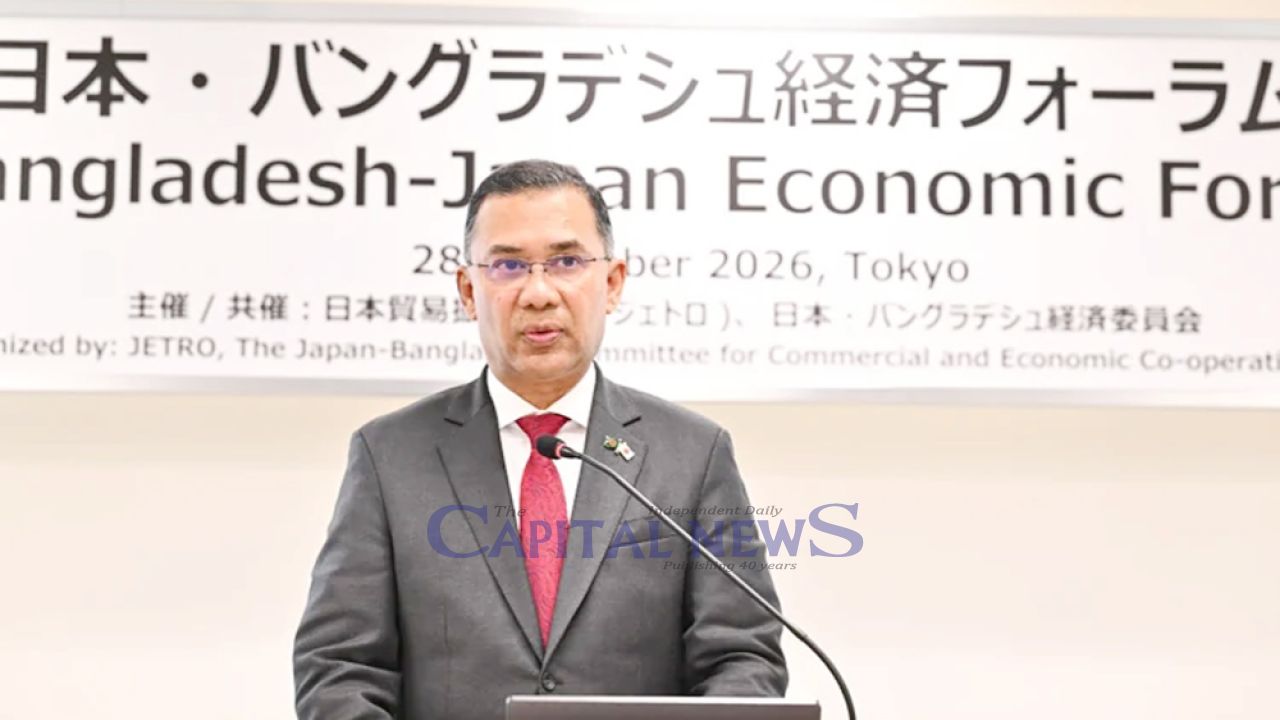
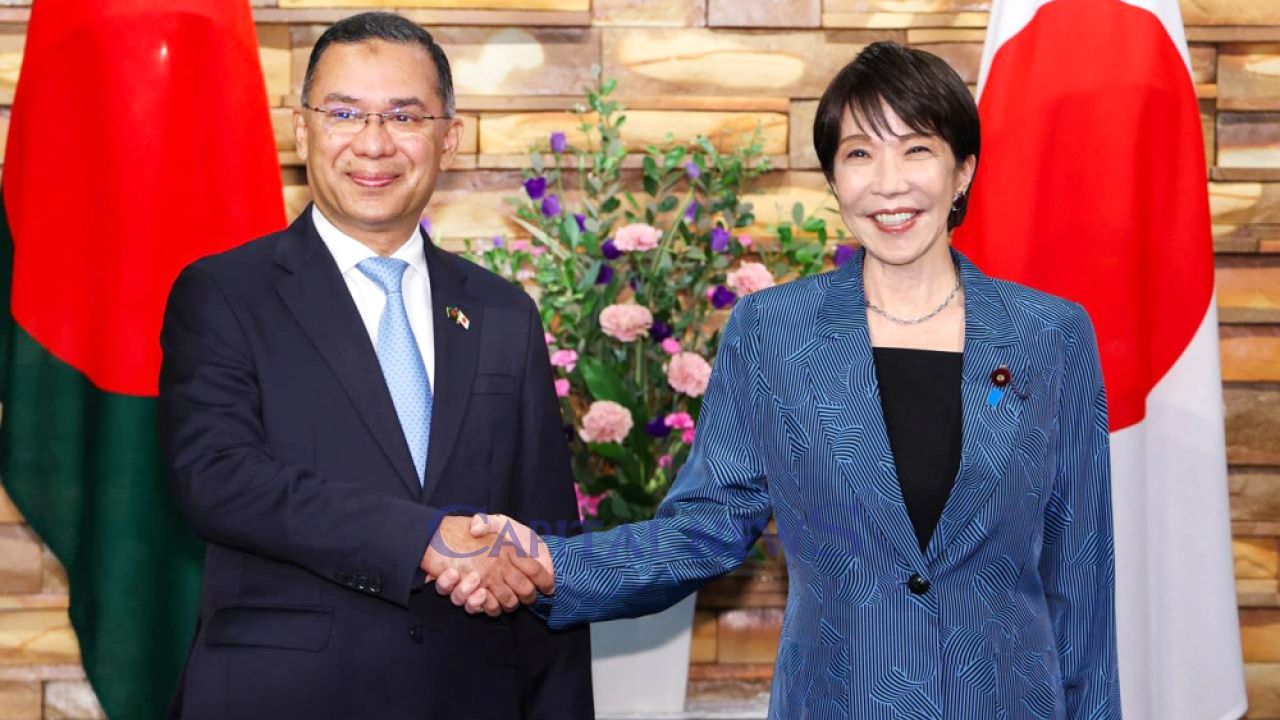
Special Correspondent: Prime Minister Tarique Rahman has invited Japanese companies to invest in five priority sectors in Bangladesh, aiming to transform decades of friendship and development cooperation into a stronger economic partnership driven by trade, industrial growth and technology transfer.
The sectors are automotive manufacturing, energy, technology and space cooperation, rail and logistics, and agro-processing and manufacturing.
“I invite Japanese companies to explore five key areas for future cooperation and business opportunities for mutual benefits,” the Prime Minister said while delivering the keynote address at the Bangladesh-Japan Economic Forum Dialogue at JETRO Hall in Tokyo on Wednesday.
Highlighting the significant gap between the two countries' longstanding relations and the actual level of Japanese investment in Bangladesh, Tarique Rahman said around 350 Japanese companies were operating in the country, while Japanese foreign direct investment remained below $500 million.
The figures, he indicated, point to considerable room for expanding investment and creating new business opportunities in Bangladesh.
Bangladesh exported goods worth $1.36 billion to Japan and imported $2.16 billion worth of products from the country in the last fiscal year, reflecting the potential for a more balanced and diversified economic relationship.
The Prime Minister stressed that the partnership should move beyond traditional development assistance towards greater trade, investment, industrial collaboration and mutually beneficial business ventures.
Japan has been one of Bangladesh's most important development partners since independence. It was among the first countries to recognise Bangladesh in February 1972 and has remained its largest development partner for more than five decades.
Recalling this longstanding friendship, Tarique Rahman also acknowledged the contributions of his parents, Shaheed President Ziaur Rahman and former Prime Minister Begum Khaleda Zia, who visited Japan several times and helped strengthen bilateral relations.
“Today, I want to speak about the next 30-50 years of partnership and collaboration,” he said, signalling Bangladesh's ambition to establish a long-term economic relationship with Japan.
A major development in this regard is the Economic Partnership Agreement (EPA) signed by Bangladesh and Japan this year. The first agreement of its kind concluded by Bangladesh with any country, it is expected to create new opportunities for exporters and businesses on both sides.
Under the agreement, 7,379 Bangladeshi products will enjoy duty-free access to the Japanese market, while Japanese products, including steel, automotive parts and electronic components, will receive preferential access to Bangladesh.
The agreement could help Bangladeshi exporters diversify their markets, improve competitiveness and attract investment from Japanese companies seeking production bases and business opportunities in the country.
For Bangladesh, the challenge will be to make effective use of the new market access by improving product quality, ensuring compliance with international standards, strengthening logistics and increasing the capacity of local industries.
The Prime Minister also highlighted Bangladesh's large domestic market of more than 180 million people, its young workforce and its expanding middle class as key advantages for foreign investors.
With a median age of 27, Bangladesh offers Japanese companies access to a sizeable labour force and a growing consumer base. The country is also expected to become one of the world's top 10 consumer economies by 2030, he said.
Automotive manufacturing emerged as the first priority in the Prime Minister's investment agenda. Welcoming Toyota's plan, he underscored the scope for expanding cooperation in the automotive industry.
Greater Japanese investment in this sector could help Bangladesh develop local manufacturing capacity, create skilled jobs and establish stronger links with international supply chains. Cooperation could also support the development of supporting industries, including automotive parts and electronic components.
Energy is another priority, as reliable and affordable supplies remain essential for industrial expansion and economic competitiveness. Japanese investment and technology could contribute to improving energy infrastructure and supporting cleaner and more efficient energy systems.
In technology and space cooperation, the partnership could open avenues for knowledge exchange, advanced technological applications and the development of local expertise. Meanwhile, cooperation in rail and logistics could help improve the movement of goods, reduce transportation costs and strengthen links between industrial centres, ports and markets.
Agro-processing and manufacturing offer further opportunities to increase the value of locally produced goods, reduce post-harvest losses and expand exports through modern production methods and improved quality standards.
The five-sector initiative comes at a time when Bangladesh is seeking greater foreign investment to diversify its economy, generate employment and strengthen its export base.
For Japanese companies, Bangladesh offers a large domestic market, a young workforce and preferential access to an expanding network of trade opportunities. For Bangladesh, Japanese investment could bring capital, technology, management expertise and access to global production networks.
However, converting these opportunities into actual investment will depend on effective implementation of the EPA, a predictable business environment, efficient customs procedures, improved infrastructure and reliable energy supplies.
The success of the proposed partnership will ultimately be measured not only by the number of Japanese companies operating in Bangladesh, but also by the scale of new investment, the jobs created, the technology transferred and the growth in exports.
By inviting Japanese firms to explore five strategic sectors, the Prime Minister has set out a broader vision for Bangladesh-Japan relations—one in which a friendship built over more than five decades becomes a stronger foundation for shared prosperity in the decades ahead.
Subject : Economy Japanese investment
বৃহস্পতিবার, ২৯ অক্টোবর ২০২৬
Publish Date : 28 October 2026





Write Your Opinion