

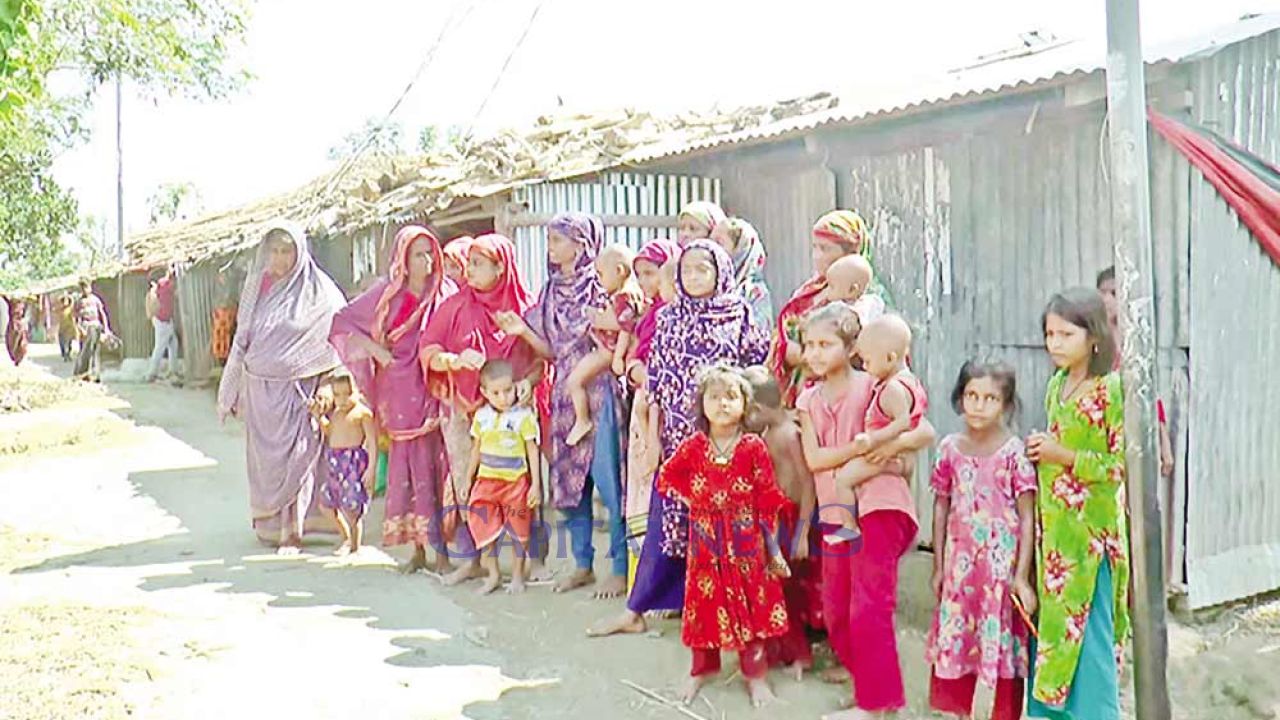
Bhola Correspondent: More than 100,000 people living in dozens of chars in Char Fasson Upazila are struggling to access basic healthcare as a shortage of doctors, non-functional community clinics and poor river transport have left the remote communities largely dependent on unqualified practitioners.
The chars, including Dhalchar, Char Kukri-Mukri, Char Motahar, Sikdar’s Char and Char Patila, have emerged in the Meghna and Tetulia rivers. Most residents depend on fishing and farming for their livelihoods.
Surrounded by rivers and separated from the mainland, the residents have to depend on engine-powered trawlers to reach hospitals in Char Fasson. During the monsoon or bad weather, rough rivers often disrupt boat services, making it difficult to take critically ill patients to hospitals. Locals said patients sometimes die on the way to hospital due to delays in receiving treatment.
The few community clinics operating in some unions are mostly in poor condition or remain closed for long periods, residents said. A lack of logistics and accommodation facilities also discourages doctors and nurses from staying in the remote chars.
As a result, residents often depend on village practitioners, traditional healers and unqualified doctors even for serious illnesses. The lack of basic medicines and diagnostic facilities further worsens the situation. Pregnant women and children are among the worst sufferers. There are few facilities for regular antenatal check-ups, institutional deliveries or emergency maternal care. Residents also said routine vaccination services do not always reach remote areas because of difficult transport links.
Anisur Rahman, a senior teacher at Dhalchar Islamia Dakhil Madrasa, recalled a tragic incident from about a year ago.
“A family hired a trawler to take a pregnant woman to Char Fasson hospital, but they could not even reach Kachapia Ghat. The woman and her unborn child died on the trawler in mid-river,” he said.
“We often witness such heartbreaking incidents. Many people die before reaching a doctor,” he added.
Shariful Islam, a health assistant at Dhalchar Community Clinic, said the facility had been unusable for a long time.
“The clinic was slightly damaged during an earlier flood. During Cyclone Remal, soil beneath the building was washed away, causing it to tilt into a ditch. People here have remained deprived of healthcare for years,” he said. Local resident Fakhrul Munshi said there was no healthcare facility in Dhalchar and communication with the upazila headquarters was extremely difficult.
“A large trawler leaves for Kachapia Ghat at 9:30am and returns at 3pm. There is no other regular transport. So even if someone falls seriously ill, they have to wait for one of these two trips,” he said.
He said around 90 percent of people in the fishing-dominated area relied on unqualified practitioners and bought medicines based on their limited knowledge, which often caused more harm than good.
Dr Achint Kumar Ghosh, Assistant Director of the Bhola Family Planning Office, said many chars in the district were difficult to reach from upazila health complexes.
“If healthcare services can be delivered directly to these remote chars, the residents will benefit. We have informed the higher authorities about establishing new service centres and recruiting the necessary manpower,” he said.
Char Fasson Upazila Nirbahi Officer Rumana Afroz said the administration was aware of the suffering of people in the isolated chars.
“The government has already expanded social safety-net coverage, and new plans are being taken to improve access to education and healthcare,” she said.
Residents demanded new health centres and community clinics, regular deployment of doctors and health workers, adequate medicine supplies and water ambulances or speedboats for transporting emergency patients.
সোমবার, ২৪ আগস্ট ২০২৬
Publish Date : 24 August 2026
Write Your Opinion