The Daily Capital News

Rooftop Solar Gains Momentum in Ishwarganj as Local Government, Stakeholders Explore Clean Energy Future

Rooftop Solar Gains Momentum in Ishwarganj as Local Government, Stakeholders Explore Clean Energy Future


Rayhan Ahmed, Mymensingh Bureau Chief: Local government representatives, government officials and stakeholders have stressed the need to expand rooftop solar power in Ishwarganj of Mymensingh to address climate change risks, strengthen energy security and meet the country’s growing electricity demand.


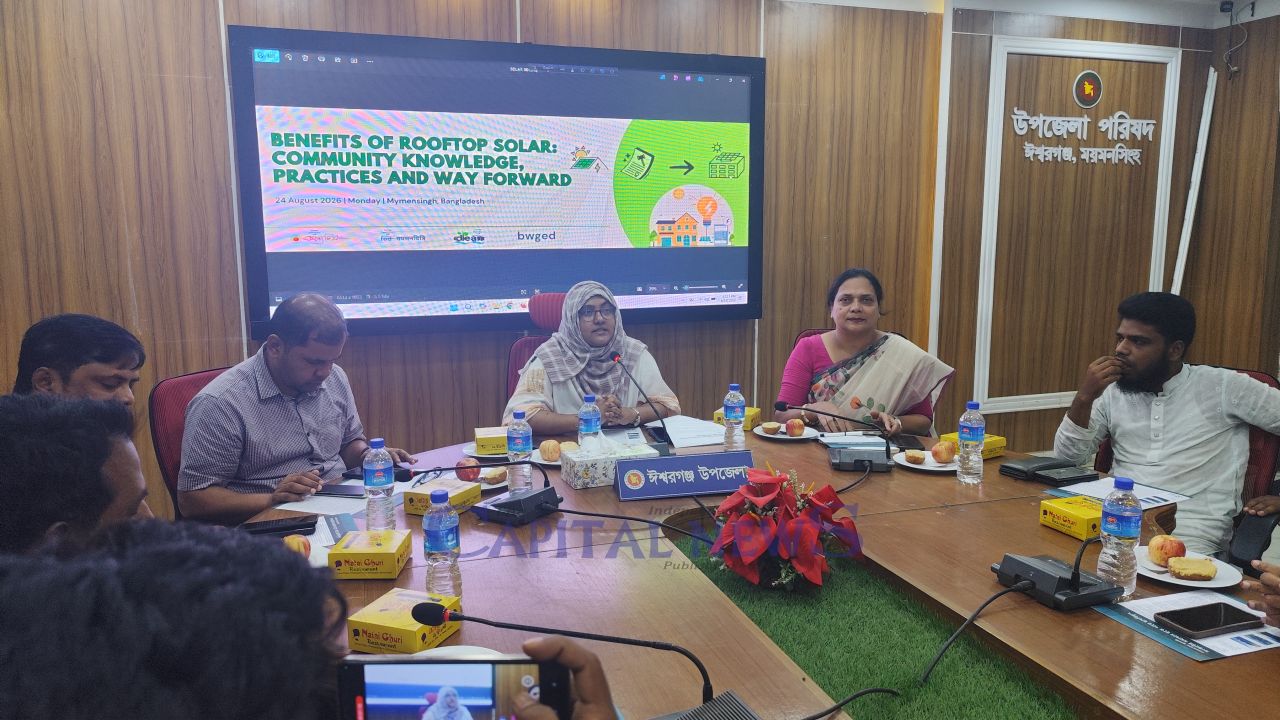
A stakeholder consultation titled “Guidelines for LGIs, Leaders and Stakeholders on the Climate-Energy Nexus, with Special Focus on Rooftop Solar” was held at the Ishwarganj Upazila Parishad conference room on Monday.


The event was jointly organised by Onno Chitra Foundation, Coastal Livelihood and Environmental Action Network (CLEAN), and Bangladesh Working Group on Ecology and Development (BWGED).


Ishwarganj Upazila Parishad Administrator and Upazila Nirbahi Officer (UNO) Sanjida Rahman chaired the meeting.


The discussion focused on the current status and potential of rooftop solar power, its benefits, and steps that could be taken at the local level to prepare for future electricity challenges.


A policy paper titled “Opportunities and Potential of Rooftop Solar Power” was presented and shared with the participants. The paper highlighted the potential of rooftop solar to create employment, improve energy security, contribute to economic development and protect the environment.


According to the policy paper, Bangladesh’s power and energy sector remains heavily dependent on imported fossil fuels. Fluctuations in international fuel prices and pressure on foreign exchange reserves are therefore creating challenges for the country’s energy security.


Against this backdrop, the paper stressed the importance of expanding renewable energy to build a more sustainable and secure energy system.


Participants said unused rooftops of homes, government offices, educational institutions, factories and commercial establishments across the country could become important sources of solar power generation.


Expanding rooftop solar could not only reduce pressure on the national power grid but also create opportunities for electricity generation at the local level, they said.


The economic potential of rooftop solar was also discussed at the meeting. The policy paper noted that installation, maintenance and technical services related to solar power could generate new employment opportunities. The expansion of renewable energy could also contribute positively to broader economic activities.


Among those attending the meeting were the Upazila Project Implementation Officer, Upazila Youth Development Officer Nandan Kumar Debnath, Upazila Women Affairs Officer Fatema-Tuz-Zohura, and Aktaruzzaman, a member of the Forum on Ecology and Development, Mymensingh, along with representatives from different stakeholder groups.


The programme was moderated by Nusrat Neha, an intern of the COP project of Onno Chitra Foundation.


Speaking at the event, Onno Chitra Foundation Executive Director Rebecca Sultana said rooftop solar was not merely an alternative source of electricity but also an important means of building a climate-resilient future.


She stressed the need for greater awareness at the local level and stronger coordination between government and private-sector actors to realise the potential of rooftop solar.


“Many homes and institutions across the country have rooftops that can be used for solar power generation. If these spaces can be properly utilised, they can open up new possibilities for the country’s electricity system,” she said.


She also called for easier access to financing, technical assistance and effective policy support to accelerate rooftop solar expansion.


Speakers at the meeting said local government institutions could play a significant role in promoting renewable energy. They said awareness campaigns, identification of suitable rooftops and coordination with relevant organisations could help expand rooftop solar initiatives from the upazila level.


Participants further observed that wider use of solar power could help protect the environment while reducing carbon emissions.


The policy paper also emphasised the importance of rooftop solar in addressing climate change, protecting the environment and advancing the Sustainable Development Goals (SDGs).


The meeting concluded with a discussion on future electricity challenges, the expansion of renewable energy and practical measures for installing rooftop solar systems at the local level. Stakeholders also shared their views and recommendations on how such initiatives could be expanded in Ishwarganj and beyond.


Subject : National

Write Your Opinion

The Daily Capital News

সোমবার, ২৪ আগস্ট ২০২৬


Rooftop Solar Gains Momentum in Ishwarganj as Local Government, Stakeholders Explore Clean Energy Future

Publish Date : 24 August 2026

featured Image
Rayhan Ahmed, Mymensingh Bureau Chief: Local government representatives, government officials and stakeholders have stressed the need to expand rooftop solar power in Ishwarganj of Mymensingh to address climate change risks, strengthen energy security and meet the country’s growing electricity demand. A stakeholder consultation titled “Guidelines for LGIs, Leaders and Stakeholders on the Climate-Energy Nexus, with Special Focus on Rooftop Solar” was held at the Ishwarganj Upazila Parishad conference room on Monday. The event was jointly organised by Onno Chitra Foundation, Coastal Livelihood and Environmental Action Network (CLEAN), and Bangladesh Working Group on Ecology and Development (BWGED). Ishwarganj Upazila Parishad Administrator and Upazila Nirbahi Officer (UNO) Sanjida Rahman chaired the meeting. The discussion focused on the current status and potential of rooftop solar power, its benefits, and steps that could be taken at the local level to prepare for future electricity challenges. A policy paper titled “Opportunities and Potential of Rooftop Solar Power” was presented and shared with the participants. The paper highlighted the potential of rooftop solar to create employment, improve energy security, contribute to economic development and protect the environment. According to the policy paper, Bangladesh’s power and energy sector remains heavily dependent on imported fossil fuels. Fluctuations in international fuel prices and pressure on foreign exchange reserves are therefore creating challenges for the country’s energy security. Against this backdrop, the paper stressed the importance of expanding renewable energy to build a more sustainable and secure energy system. Participants said unused rooftops of homes, government offices, educational institutions, factories and commercial establishments across the country could become important sources of solar power generation. Expanding rooftop solar could not only reduce pressure on the national power grid but also create opportunities for electricity generation at the local level, they said. The economic potential of rooftop solar was also discussed at the meeting. The policy paper noted that installation, maintenance and technical services related to solar power could generate new employment opportunities. The expansion of renewable energy could also contribute positively to broader economic activities. Among those attending the meeting were the Upazila Project Implementation Officer, Upazila Youth Development Officer Nandan Kumar Debnath, Upazila Women Affairs Officer Fatema-Tuz-Zohura, and Aktaruzzaman, a member of the Forum on Ecology and Development, Mymensingh, along with representatives from different stakeholder groups. The programme was moderated by Nusrat Neha, an intern of the COP project of Onno Chitra Foundation. Speaking at the event, Onno Chitra Foundation Executive Director Rebecca Sultana said rooftop solar was not merely an alternative source of electricity but also an important means of building a climate-resilient future. She stressed the need for greater awareness at the local level and stronger coordination between government and private-sector actors to realise the potential of rooftop solar. “Many homes and institutions across the country have rooftops that can be used for solar power generation. If these spaces can be properly utilised, they can open up new possibilities for the country’s electricity system,” she said. She also called for easier access to financing, technical assistance and effective policy support to accelerate rooftop solar expansion. Speakers at the meeting said local government institutions could play a significant role in promoting renewable energy. They said awareness campaigns, identification of suitable rooftops and coordination with relevant organisations could help expand rooftop solar initiatives from the upazila level. Participants further observed that wider use of solar power could help protect the environment while reducing carbon emissions. The policy paper also emphasised the importance of rooftop solar in addressing climate change, protecting the environment and advancing the Sustainable Development Goals (SDGs). The meeting concluded with a discussion on future electricity challenges, the expansion of renewable energy and practical measures for installing rooftop solar systems at the local level. Stakeholders also shared their views and recommendations on how such initiatives could be expanded in Ishwarganj and beyond.  

The Daily Capital News

Advisory Editor: Gayeshwar Chandra Roy
Editor: Abul Kashem Majumder
Acting Editor: Mohammad Alamgir Hossain
Executive Editor: Farid Ahmed Ripon

© 2025 The Daily Capital News